
A5 black hardcover dream journal notebook with 192 pages, dot grid paper, numbered pages, and elastic closure band for dream recording, vision boarding, and creative writing projects at home, work, or therapy sessions.


A5 black hardcover dream journal notebook with 192 pages, dot grid paper, numbered pages, and elastic closure band for dream recording, vision boarding, and creative writing projects at home, work, or therapy sessions.
A5 Black Hardcover Dream Journal with 192 Dot Grid Pages and Elastic Closure
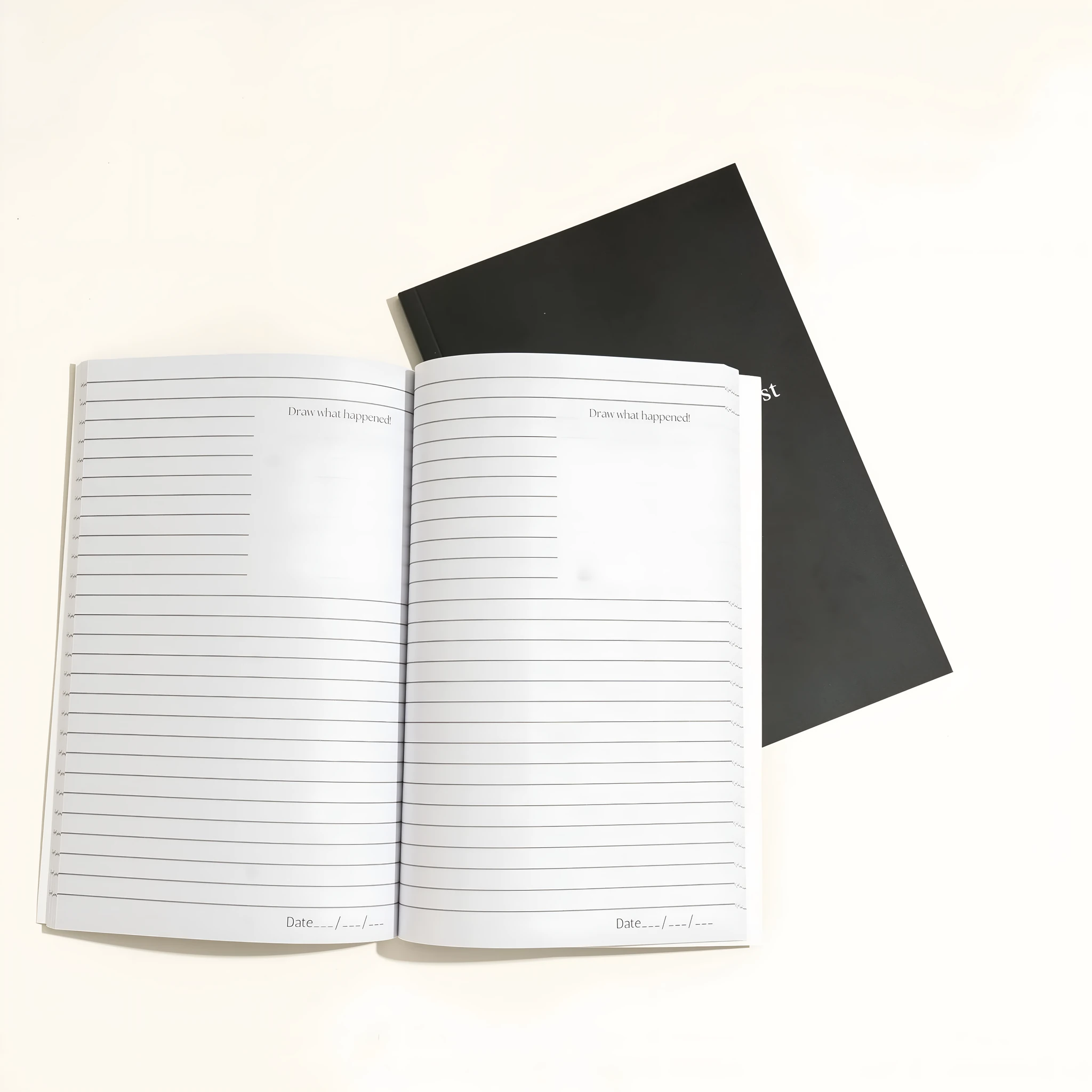
This A5 hardcover dream journal provides a structured, portable notebook specifically designed for recording dreams, creative writing, and personal reflections. Its discreet black cover and professional styling make it suitable for use at home, in therapy sessions, or as part of a daily journaling routine at work. The interior features 192 pages of dot grid paper, offering the guidance of a grid for neat writing and sketching without the full constraints of lined paper, facilitating both text and visual entries like vision boards.
Features and Construction

The journal is built around practical features that support consistent use and organisation. Key elements include page numbering, a ribbon marker, and a secure closure system, all contained within a robust hardcover format.
Material and Build
The notebook uses a sturdy hardcover construction to protect its contents. The binding is Smyth-sewn, a method that enhances durability and allows the journal to lay relatively flat when open. The paper inside is 100 grams per square metre (gsm), a weight chosen to provide a substantial writing surface that minimises ghosting or show-through from most common pens, including many fountain pens.
Size and Practical Fit
This journal is formatted in the international A5 size, measuring 148 millimetres by 210 millimetres. This dimension balances a useful writing area with portability, fitting easily into most bags, backpacks, or briefcases. The compact form factor encourages carrying it as part of a daily routine, ensuring it is available for recording thoughts immediately upon waking or during moments of inspiration.
Uses and Placement
While branded as a dream journal, the notebook's flexible design supports a range of personal and professional writing applications. Its neutral styling and functional layout make it adaptable to different environments and purposes.
Event or Professional Use
The journal's clean, black hardcover presents a professional appearance appropriate for clinical settings, such as therapy or counselling sessions where clients might use it for notes or exercises. Coaches, workshop facilitators, or students of psychology may also find it a useful tool for tracking observations, client notes, or personal development reflections in an organised, discreet format.
Everyday Home Use
At home, this notebook serves as a centralised log for dreams, daily journaling, creative writing projects, or planning. The dot grid pages are particularly useful for creating vision boards, sketching out ideas, or bullet journaling, providing structure without limiting creativity. The elastic closure band helps keep pages flat and protected when the journal is stored on a bedside table, desk, or bookshelf.
Benefits and Buying Value
The value of this product lies in its combination of specific, purpose-driven features within a well-constructed format. It offers a dedicated tool that separates dream recording or creative work from general notetaking, which can help build consistency.
Reuse and Low Maintenance
The hardcover and sewn binding are designed for repeated handling over time. The 100 gsm paper reduces the likelihood of ink bleeding through, preserving the usability of both sides of each page throughout the journal's 192-page capacity. Maintenance is minimal, primarily involving keeping the cover clean and using the elastic band to prevent page damage when not in use.
Why Choose This Product
This dream journal is selected for its clear focus and complete feature set. It provides all the core elements—durable cover, high-page count, dot grid paper, page numbering, a marker, and a closure—in one product. For individuals seeking a single, ready-to-use notebook for dedicated dream logging or structured creative projects, it eliminates the need to source and combine separate components like page markers or closures.