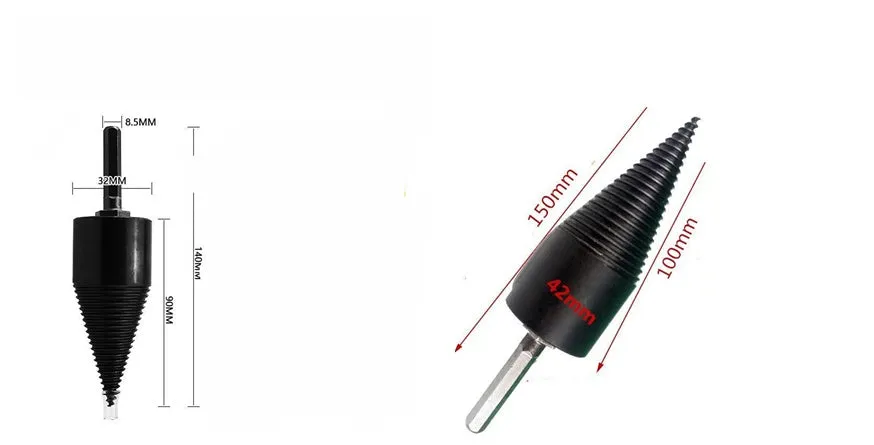
Firewood-breaking drill bit for electric hand drills, electric hammers, or water drills, a hexagonal wood-splitting drill bit accessory in 32mm or 42mm sizes designed as a firewood splitter or small wood breaker cone for household use.


Firewood-breaking drill bit for electric hand drills, electric hammers, or water drills, a hexagonal wood-splitting drill bit accessory in 32mm or 42mm sizes designed as a firewood splitter or small wood breaker cone for household use.
Hexagonal Firewood Splitting Drill Bit for Hand Drills, Hammers, and Water Rigs

Preparing firewood traditionally requires space, heavy splitting mauls, and significant physical effort. This firewood-breaking drill bit offers a more compact and accessible solution by utilising the power tools you may already own. Designed as a specialised accessory, it converts the rotational force of an electric hand drill, electric hammer, or water drill rig into a focused splitting action. The core advantage is its practical application for household-scale tasks, allowing you to process smaller logs without dedicated, bulky equipment. It is specifically noted as a solution for a 'small wood breaker', indicating its suitability for manageable, domestic firewood preparation rather than industrial forestry work.
Features and Construction
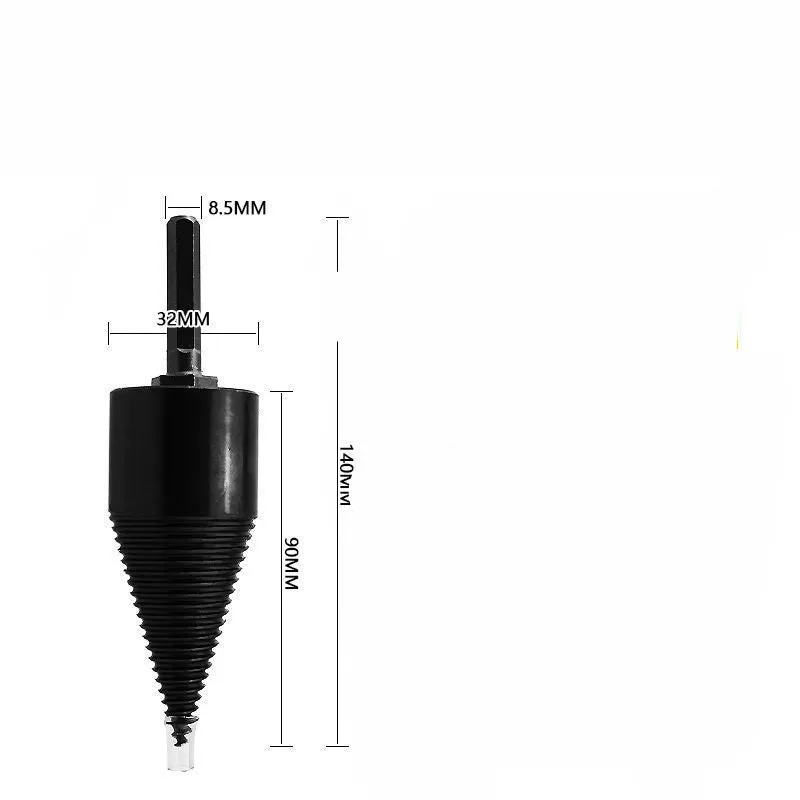
The product's design is centred on compatibility and choice. Its primary feature is the hexagonal shank, a common and secure fitting for many power tool chucks, ensuring a firm connection during use. The source text provides two clear, measurable specifications that form the basis for selection: the 32mm and 42mm bit sizes. While the exact material is not stated, the conical head shape is implied by terms like 'splitting cone' and 'wood chopper bit', designed to wedge into and split wood along the grain.
Material and Build
The source text does not specify the metal alloy or treatment used in the bit's construction. Therefore, no claims can be made about hardness, corrosion resistance, or lifespan. The build is defined by its functional shape: a hexagonal shank for tool attachment and a conical, tapered head engineered for splitting. This practical design focuses the tool's torque into a penetrating and widening force to break apart logs. Users should assess the bit's suitability based on the known size options and its intended use with common drills and hammers.
Size and Practical Fit
The two available sizes—32mm and 42mm—offer a concrete choice for different splitting tasks. A 32mm bit may be suited to smaller-diameter logs or for use with lower-torque tools, while the 42mm option provides a broader splitting surface for slightly larger rounds. The hexagonal shank design is a standard fitting for compatible tool chucks, promoting secure fastening. The product's 'household' classification suggests it is not intended for large-diameter, dense hardwood logs typically processed with hydraulic splitters, aligning its use with garden waste, kindling, or smaller fuel logs.
Uses and Placement

This accessory expands the functionality of standard power tools into the realm of garden and homestead maintenance. It is positioned as a niche but practical solution for those who need to process wood intermittently and wish to avoid storing a single-purpose, full-sized log splitter. The ability to use it with an electric hand drill makes it highly portable, while compatibility with more powerful electric hammers or water drill rigs addresses tougher splitting jobs.
Event or Professional Use
While primarily for household use, this bit could serve in scenarios where portable, on-demand splitting is beneficial. For example, at a campsite with generator power, a hand drill fitted with this bit could process fallen branches for a fire. In a professional setting, such as a landscaping or grounds maintenance team, it could be a supplementary tool for clearing small-diameter woody debris on-site without returning to a workshop. Its value lies in converting a general-purpose power tool already in the kit into a task-specific implement, saving space and transport weight.
Everyday Home Use
For the typical homeowner, this bit turns a common garage tool into a useful garden accessory. It is suited for breaking up old fence palings, pruning larger branches from tree cuttings, or preparing kindling and small logs for a wood-burning stove or fire pit. The process is likely more controlled and requires less swing space than using an axe, which can be advantageous in confined gardens or sheds. It provides a mechanical advantage, reducing the pure upper-body strength needed for splitting, which can be helpful for users with limited physical strength.
Benefits and Buying Value
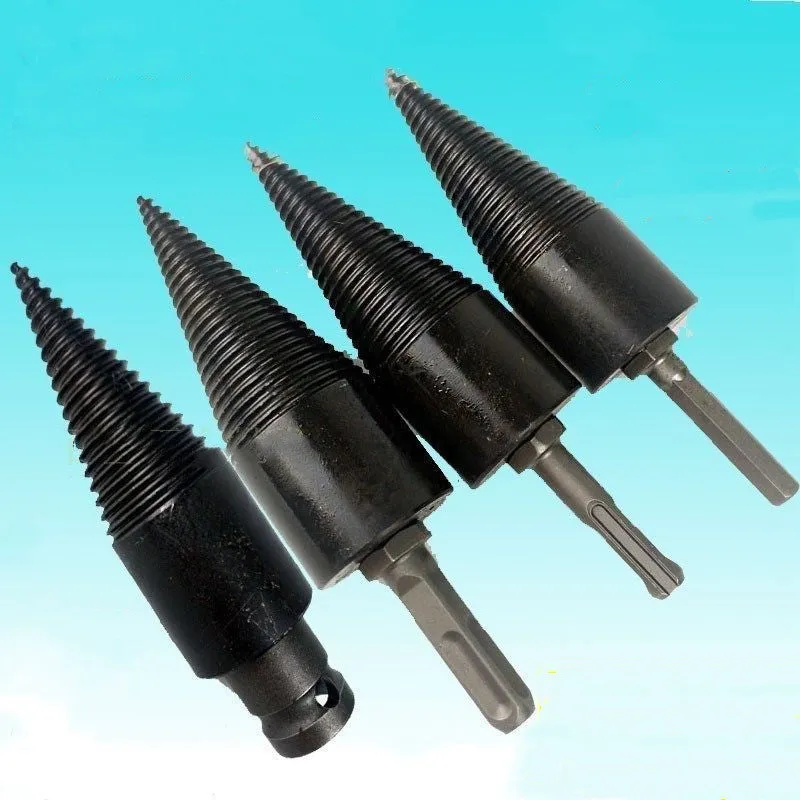
The core value proposition is multifunctionality and space efficiency. Instead of investing in a standalone log splitter, this accessory leverages existing tools. For those with an electric hand drill, electric hammer, or water drill, it represents a low-cost entry into mechanical wood splitting. The option to purchase a single size or a set (A and B) allows users to match their purchase to their most common task, whether that's finer kindling or slightly larger logs.
Reuse and Low Maintenance
As a simple metal bit, it requires minimal maintenance: keeping it clean, dry, and sharp (if applicable, though sharpening methods are not specified). Its durability in use will depend on factors like the hardness of the wood being split and the power of the driving tool, which are not detailed in the source. The value through reuse comes from its attachment to tools that are used for many other jobs; the bit itself can be used repeatedly whenever a wood-splitting task arises, stored compactly with other drill bits.
Why Choose This Product
Choose this firewood-breaking drill bit if you require a compact, tool-powered method for splitting small to medium-sized logs and already own a compatible electric hand drill, electric hammer, or water drill. The clear differentiators are the two specified size options (32mm and 42mm) and the three-tool compatibility. It is a pragmatic choice for occasional use where purchasing and storing a dedicated, full-sized log splitter is impractical. The decision between style A (32mm), style B (42mm), or the set should be based on an assessment of the typical diameter of wood you need to process.