
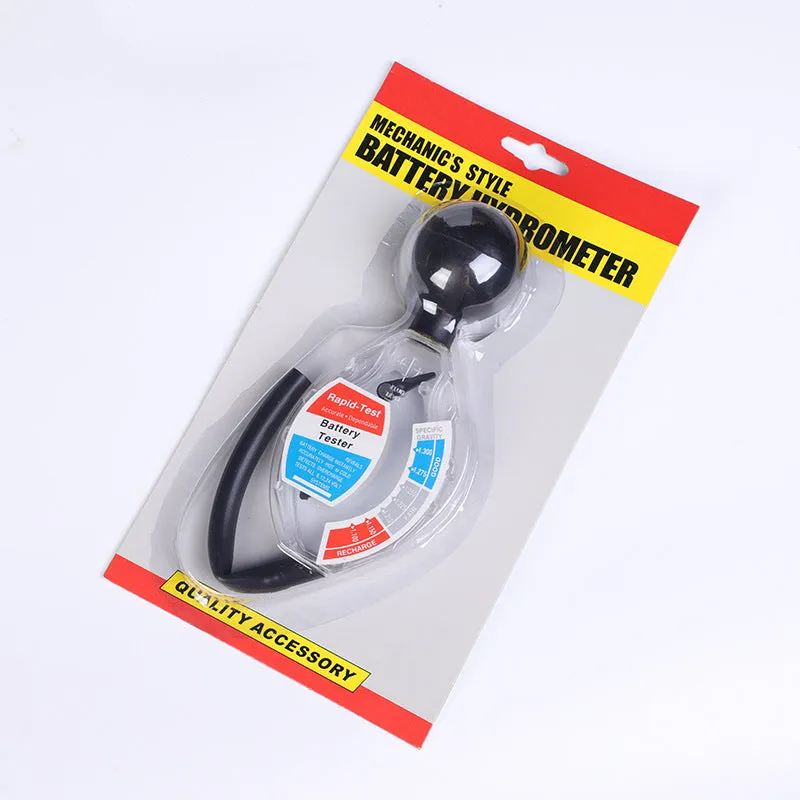
Liquid hydrometer electrolyte battery detector densitometer tool for lead-acid battery testing, made from ABS plastic with a measurement range of 1.1-1.3, accurate to 0.9*, and compact dimensions of 45mm x 100mm x 135mm.


Liquid hydrometer electrolyte battery detector densitometer tool for lead-acid battery testing, made from ABS plastic with a measurement range of 1.1-1.3, accurate to 0.9*, and compact dimensions of 45mm x 100mm x 135mm.
ABS Liquid Hydrometer for Testing Lead-Acid Battery Electrolyte Specific Gravity
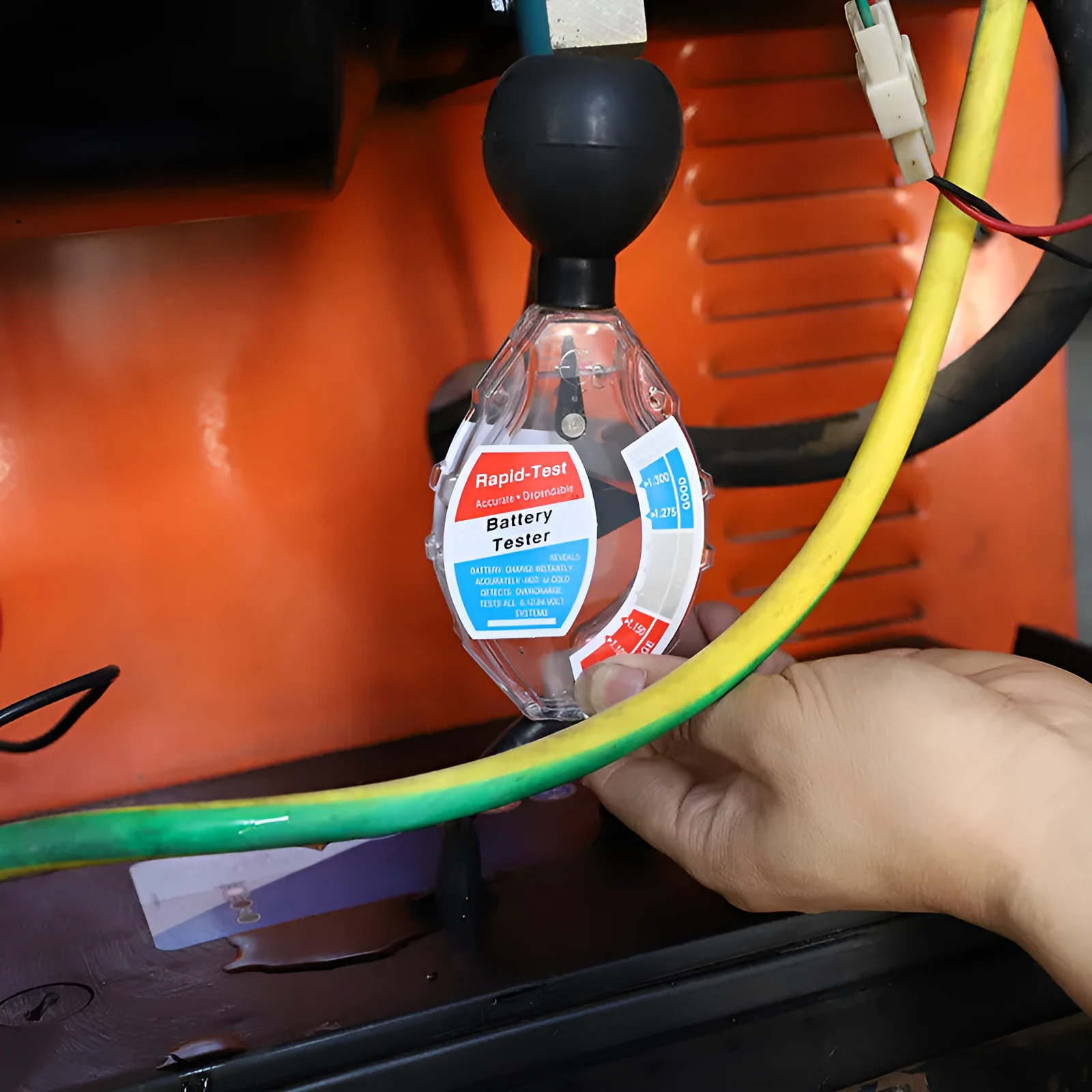
Monitoring the state of charge in lead-acid batteries often involves checking the specific gravity of the electrolyte solution. This handheld hydrometer provides a direct, mechanical method for this essential maintenance task, suited for automotive workshops, marine applications, or home backup power systems. It delivers a practical reading without requiring complex electronics, using a simple suction principle to draw fluid into its chamber. The clear scale, marked from 1.1 to 1.3, allows you to assess battery condition based on the density of the acid mixture, a key indicator of charge level and overall health.
Features and Construction
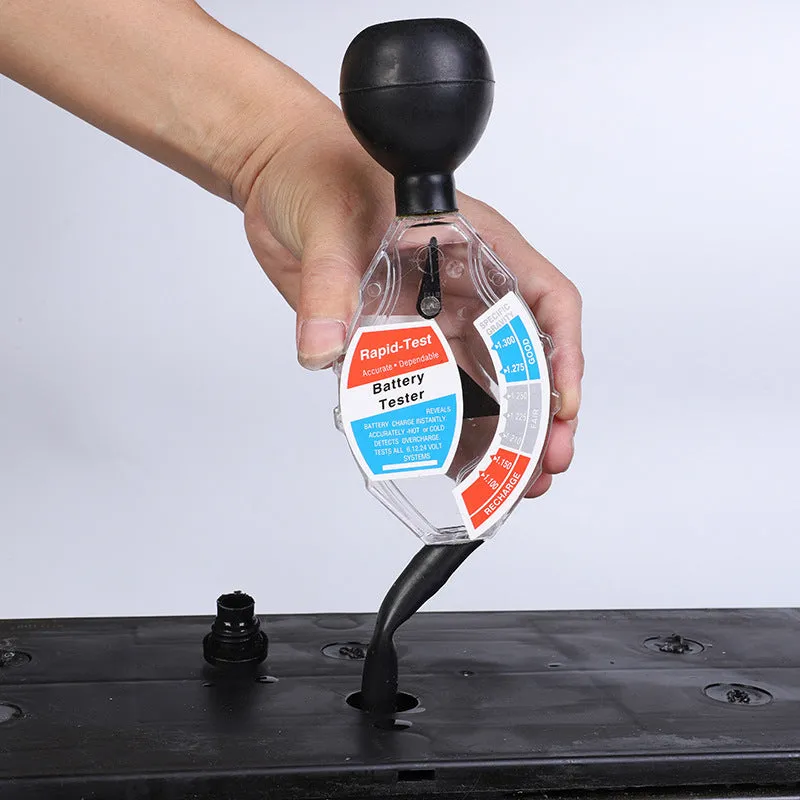
Built as a dedicated tool for a single, clear purpose, this hydrometer’s design focuses on functionality and straightforward use. Its construction and specifications are geared towards providing reliable readings in a typical battery maintenance environment.
Material and Build
The main body of the hydrometer is made from ABS (Acrylonitrile Butadiene Styrene) plastic. This material is widely used in tools and instruments for its favourable properties: it offers good resistance to many chemicals, including dilute acids encountered in battery fluid, and provides a balance of toughness and rigidity. The choice of ABS contributes to a lightweight yet robust tool that can withstand the occasional knock in a workshop or garage setting.
Size and Practical Fit
The instrument's dimensions are 45mm in width, 100mm in depth, and 135mm in height, making it a compact and easily manageable tool. Its total weight is 108g, so it feels substantial in the hand without being cumbersome. This size allows it to be stored conveniently in a toolbox or carried in a kit for on-site battery checks, whether for a car, boat, or solar power storage bank.
Uses and Placement
This tool has a defined role within battery maintenance routines. Its application is specific, which helps users quickly identify whether it fits their needs.
Event or Professional Use
In professional automotive or marine workshop settings, this hydrometer serves as a quick-check tool during routine vehicle servicing or pre-season boat preparation. It allows a technician to verify the state of charge across multiple cells in a battery bank, helping diagnose underperforming cells or confirming a successful recharge. Its manual operation means no batteries or calibration are required for the tool itself, making it ready for use at any time.
Everyday Home Use
For the home DIY enthusiast or someone maintaining a backup power system, this hydrometer offers an accessible way to monitor the health of lead-acid batteries. It can be used to check a car battery's condition after a long period of inactivity, assess golf cart or mobility scooter batteries, or keep an eye on the batteries in a home renewable energy setup. The process provides tangible feedback on whether a battery needs charging, equalising, or may be nearing the end of its service life.
Benefits and Buying Value

The value of this product lies in its focused functionality and the practical information it delivers for battery maintenance decisions.
Reuse and Low Maintenance
As a purely mechanical tool with no electronic components, the hydrometer is designed for repeated use over a long period. Its ABS construction is resistant to the corrosive environment it's used in, and its simple design means there are few parts to fail. Proper cleaning after each use is the primary maintenance required, ensuring the scale remains legible and the suction mechanism clear for accurate future readings.
Why Choose This Product
This hydrometer is chosen for its specific application to lead-acid batteries and its clear, defined measurement range. It provides a concrete, numbers-based assessment (1.1 to 1.3 specific gravity) rather than a vague indication. For anyone needing to monitor battery electrolyte, it presents a straightforward, no-frills alternative to more complex or multi-function testers, focusing on delivering the essential data needed for informed battery care.
