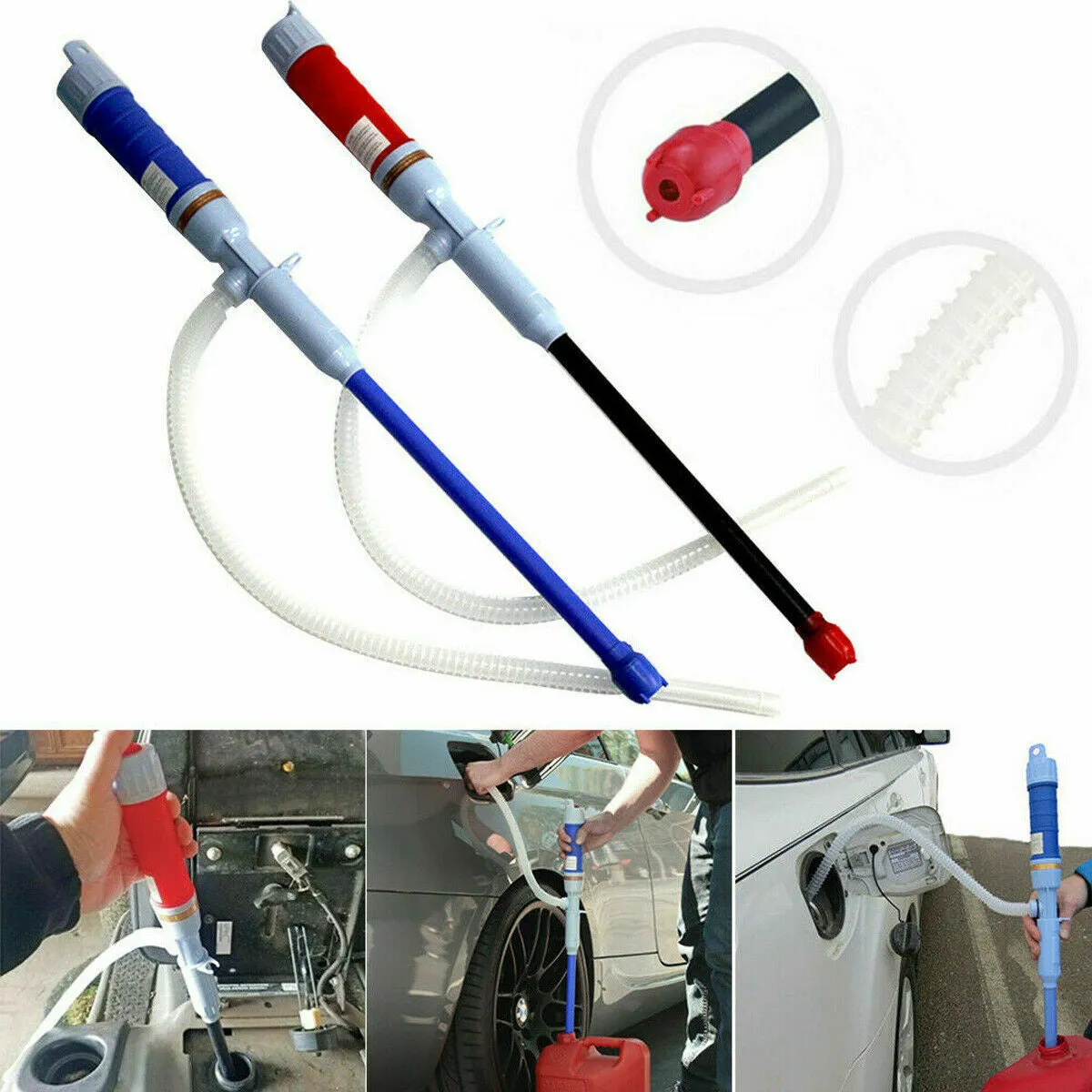
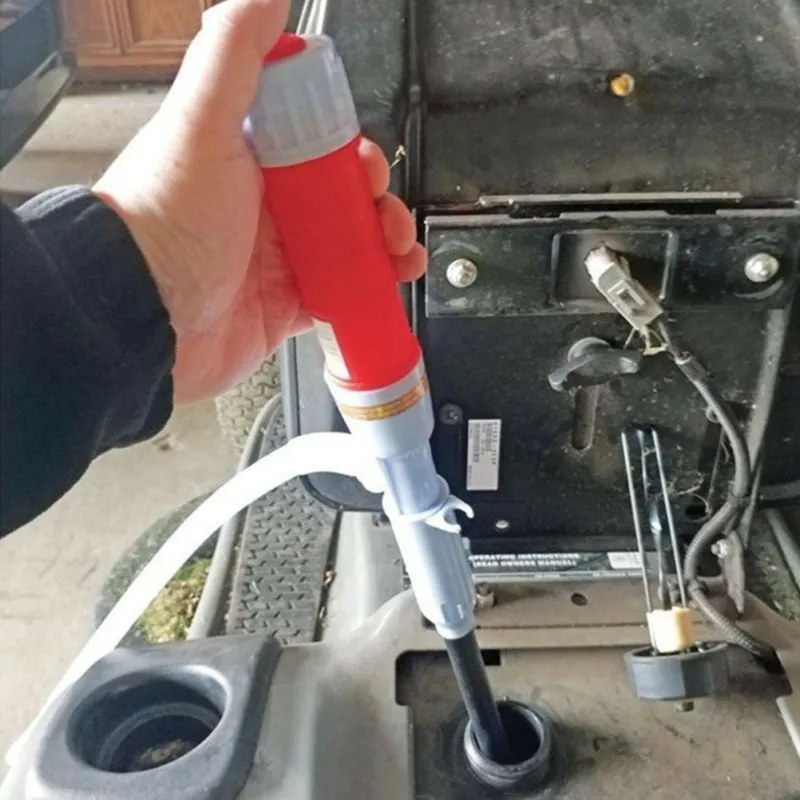
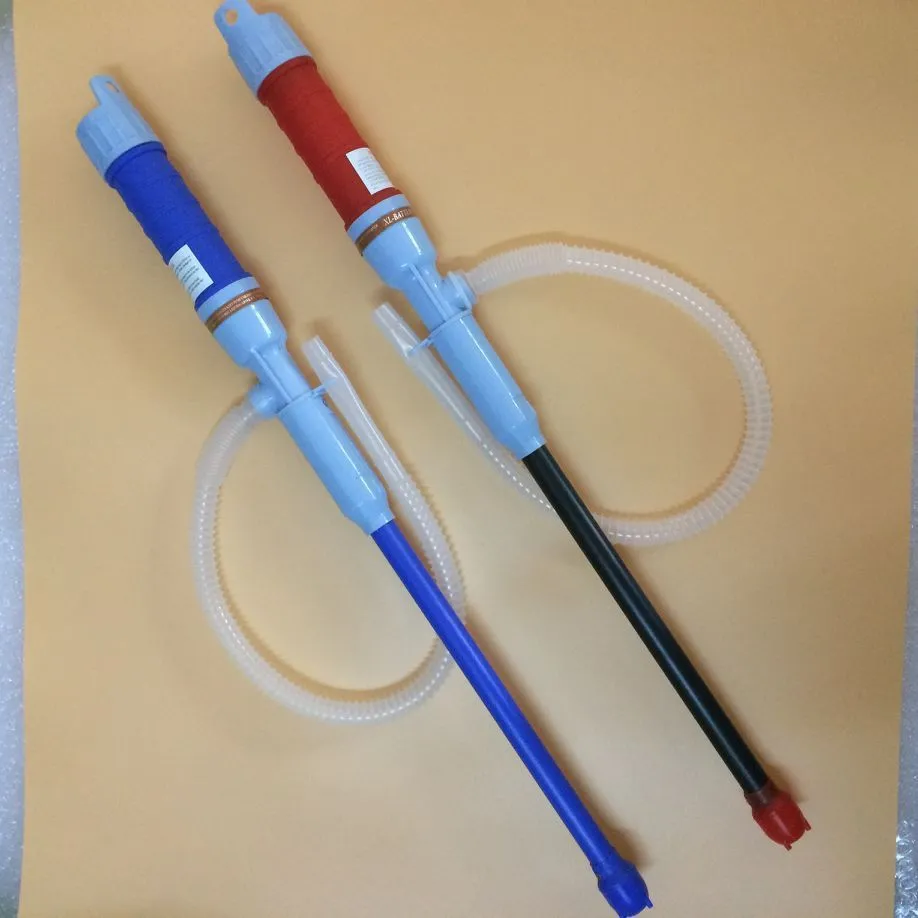
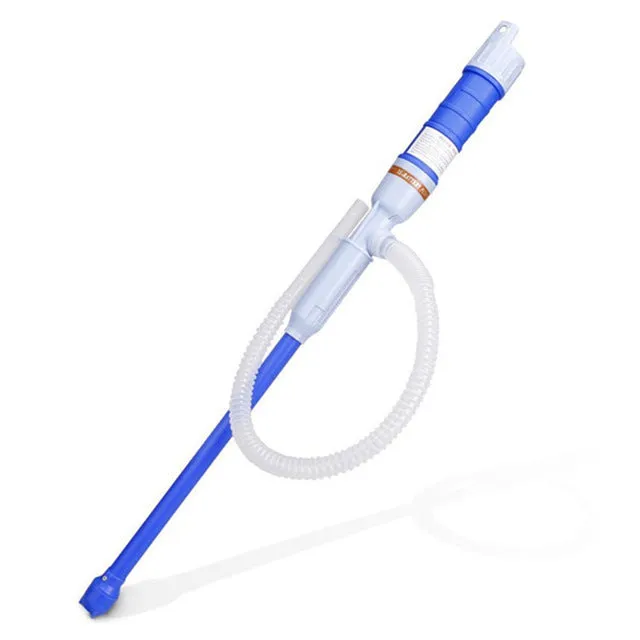
Manual siphon pump for fuel transfer in red or blue, constructed from PP material for transferring petrol, diesel, water, and chemicals between tanks for cars, trucks, boats, ATVs, and small engines.


Manual siphon pump for fuel transfer in red or blue, constructed from PP material for transferring petrol, diesel, water, and chemicals between tanks for cars, trucks, boats, ATVs, and small engines.
Manual Hand Siphon Pump for Transferring Fuel, Oil, Water, and Chemicals

This manual siphon pump provides a straightforward, non-electric method for moving liquids from one container to another. It is a practical tool designed for situations where you need to transfer fuel—such as petrol or diesel—from a storage can into a vehicle's tank, or for handling other compatible fluids like water, oil, or certain chemicals. Its operation relies on manual effort, making it a reliable option when power sources are unavailable or for use in remote locations. The pump is presented as a portable and convenient solution for a range of equipment, from everyday cars and trucks to smaller engines found on lawn tractors, boats, jet skis, ATVs, snowmobiles, and various types of farm or light commercial machinery.
Features and Construction

The pump's design centres on manual operation and material suitability for the liquids it handles. It is built to be a self-contained transfer tool without the need for batteries or an electrical connection.
Material and Build
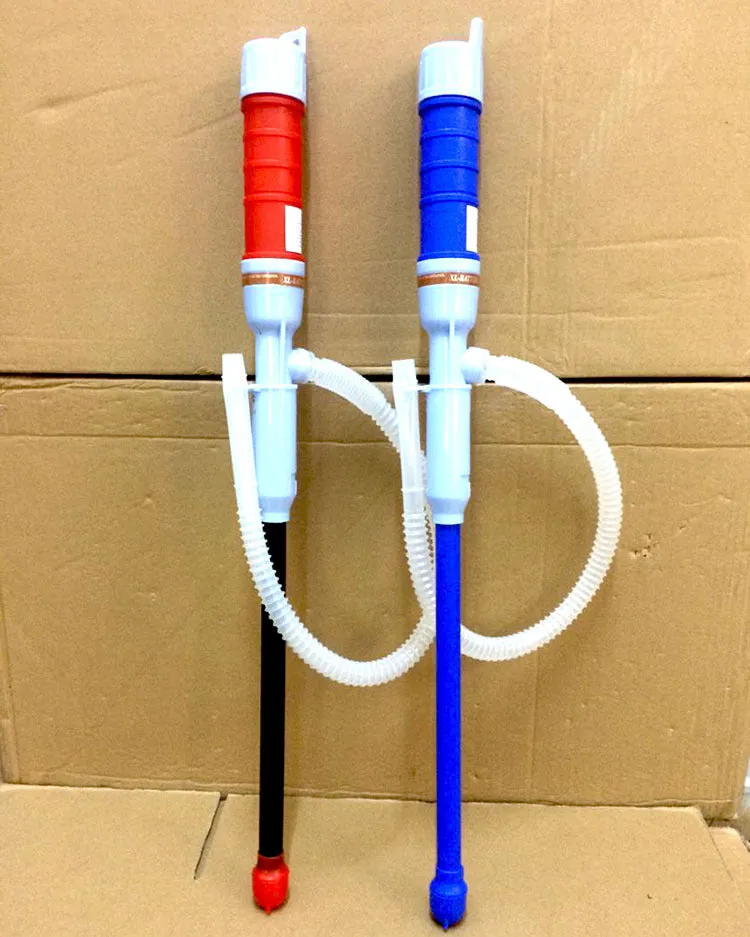
The pump is constructed from PP, or polypropylene. This thermoplastic polymer is commonly chosen for fluid-handling equipment due to its resistance to a wide range of chemicals, including many fuels, oils, and solvents. This material property makes it a practical choice for the intended uses of transferring petrol, diesel, and other similar liquids. The pump is offered in two colour options: red and blue, which can help with identification or organisation if multiple pumps are in use.
Size and Practical Fit
While specific dimensions or hose length are not detailed, the product is described as portable and convenient. This suggests a size and form factor that is manageable for hand use and easy to store in a vehicle boot, workshop, or garage. Its application across many types of vehicles and equipment—from cars and trucks to smaller engines on trimmers and chainsaws—indicates it is designed to be a versatile, general-purpose transfer tool rather than a highly specialised unit for a single machine.
Uses and Placement
The pump's utility spans both occasional domestic needs and more regular use in agricultural or light commercial settings. It serves as a bridge to move liquid where a fixed transfer system isn't present.
Event or Professional Use
In professional or agricultural contexts, this pump can be a useful tool on the farm for refuelling tractors or other equipment directly from a fuel drum. It is also applicable for light commercial operations, such as refuelling generators on a worksite or transferring water or mild chemicals. For marine use, it can assist in moving fuel to a boat or jet ski from a portable container. Its manual operation means it can be used anywhere, independent of power availability.
Everyday Home Use
For the home user, this pump is suited for tasks like filling a car's fuel tank from a spare fuel can, preparing a lawn tractor or snow thrower for seasonal use, or managing water transfer for gardening or cleaning. It provides a controlled alternative to pouring directly from a heavy can, which can reduce spillage and improve safety when handling flammable liquids like petrol.
Benefits and Buying Value

The value of this product lies in its simplicity, specific material choice, and broad application range. It addresses a clear functional need without complex features.
Reuse and Low Maintenance
As a manual tool with no electrical components, it has the potential for long-term reuse with basic care. The PP material contributes to this, as its chemical resistance helps maintain integrity when used with fuels and oils. Maintenance primarily involves ensuring the pump is drained after use and stored appropriately to keep it clean and ready for its next application.
Why Choose This Product
This pump is a choice for those who require a reliable, manual method for liquid transfer. Its defined use with fuels, oils, water, and chemicals, coupled with PP construction, offers a practical match for these tasks. When compared to more complex, powered transfer systems, its advantage is its simplicity, portability, and independence from a power source. It fills a specific niche for users who need to move liquids efficiently between containers in various settings, from the home garage to the field.