WiFi door magnetic sensor alarm with loud >100dB acousto-optic alert, IEEE 802.11 B 2.4G connectivity for smart home security monitoring, operating on DC3V power with low ≤120μA standby current for door and window entry detection


WiFi door magnetic sensor alarm with loud >100dB acousto-optic alert, IEEE 802.11 B 2.4G connectivity for smart home security monitoring, operating on DC3V power with low ≤120μA standby current for door and window entry detection
WiFi Door Magnetic Sensor Alarm with >100dB Acousto-Optic Alert and 2.4G Smart Home Connectivity
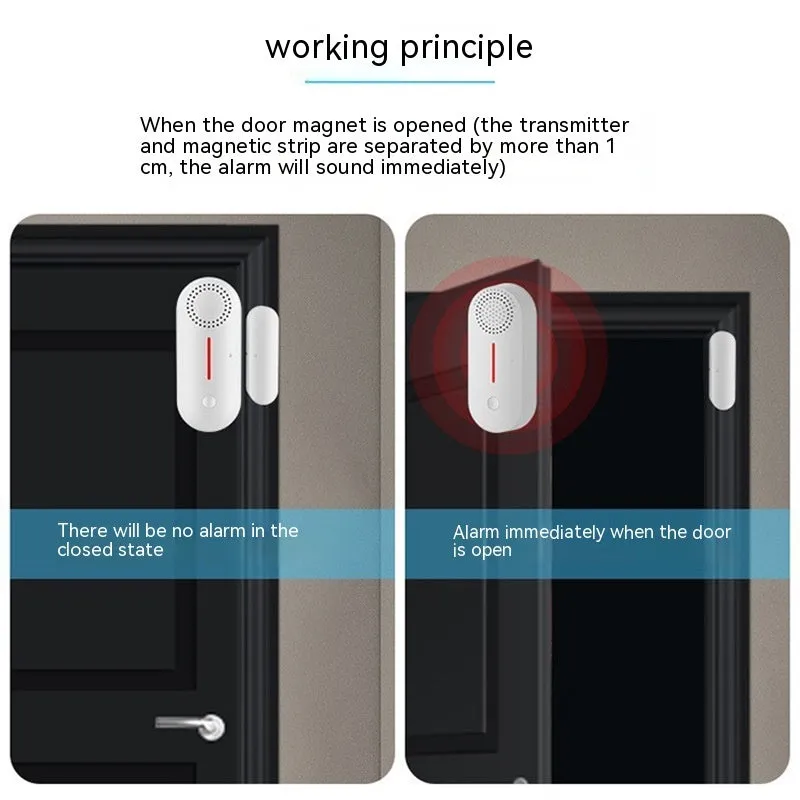
This WiFi door magnetic sensor alarm represents a focused solution for enhancing entry point security through measurable technical specifications. Designed as an acousto-optic door and window alarm, it provides both audible and visual notification when magnetic contacts detect opening movements. With its IEEE 802.11 B 2.4G WiFi connectivity, the device integrates directly into existing smart home ecosystems, enabling remote monitoring and control without requiring proprietary hubs or complex installation procedures. The documented >100dB alarm sound output ensures a clearly audible alert level, while the DC3V operation with specified current ratings offers transparent power management for continuous security monitoring applications.
Technical Specifications and Operation

The device operates according to clearly defined electrical and connectivity parameters that determine its integration and performance capabilities. These specifications provide concrete data for assessing compatibility with existing systems and understanding its operational requirements in security monitoring scenarios.
Power and Electrical Parameters
Operating on DC3V power, this sensor has documented current consumption metrics including ≤120μA static current during standby monitoring and ≤20mA alarm current when activated. These specifications indicate energy-efficient operation during normal monitoring states while providing sufficient power for the alarm generation circuitry when triggered. The DC3V requirement suggests compatibility with standard low-voltage power sources commonly available in security installations, whether through battery packs or transformed mains power supplies designed for electronic devices.
Wireless Connectivity Standard
The device utilises IEEE 802.11 B 2.4G WiFi connectivity for network integration, a widely adopted standard compatible with most modern home and small business routers. This connectivity allows the sensor to communicate its status and trigger alerts through existing network infrastructure rather than requiring dedicated radio frequency hubs. The 2.4GHz frequency band provides reliable penetration through walls and floors typical in residential environments, ensuring stable connection between the sensor installation points and the network router location.
Alarm Output Specifications
The acousto-optic alarm produces a documented >100dB sound output, representing a measurable alert level that exceeds typical conversational volume and provides clear audible notification across room distances. This specification indicates the alarm's effectiveness as a deterrent and notification method, with 100dB representing a reference point comparable to handheld power tools or motorcycle engines at close range. The inclusion of both audible and visual alarm components addresses different environmental conditions and user needs, with the visual element providing notification in noisy environments or for users with hearing considerations.
Installation and Integration

The sensor's design focuses on practical installation for door and window security applications, with its form factor and connectivity supporting straightforward integration into both new and existing security setups. The magnetic contact operation requires specific placement considerations to ensure reliable detection performance.
Physical Installation Requirements
As a door magnetic alarm sensor, the device comprises two main components – the sensor unit and the magnet – which must be aligned correctly on the door or window and its frame. While exact dimensions are not specified, the product description indicates a form factor designed for discrete placement on standard entry point profiles. Installation typically involves securing both components with screws or adhesive to opposing surfaces that come together when the door or window is closed, ensuring the magnetic field maintains contact during the closed state and breaks when opened.
Network Configuration Process
Integrating the sensor into a smart home control system requires configuration of its IEEE 802.11 B 2.4G WiFi settings to connect to the local network. This process typically involves putting the device into pairing mode and using a companion mobile application or web interface to select the network and enter security credentials. Once connected, the sensor can communicate its status – reporting open/closed conditions and alarm triggers – to designated monitoring applications or integrating with broader smart home automation rules for coordinated responses with other security devices.
Monitoring and Alert Management
Once installed and connected, the sensor provides continuous monitoring of its assigned door or window, with alert management handled through the connected smart home system. Users can typically configure notification preferences, specifying which events trigger immediate alerts versus routine status updates. The system may support different response scenarios, such as disabling the alarm during certain hours for routine entry or creating escalation procedures for repeated triggers. The remote access capability allows checking entry point status from anywhere with internet connectivity, providing peace of mind when away from the property.
Security Applications and Use Cases

This WiFi-connected magnetic sensor addresses specific security monitoring needs across residential, small business, and temporary installation scenarios. Its combination of local alarm generation and network connectivity supports both immediate deterrent functions and remote monitoring capabilities.
Residential Entry Point Security
In home environments, the sensor adds an automated alert layer to standard door locks on primary entry points like front and back doors, patio doors, or garage access points. Homeowners can use it to receive notifications of entries and exits, particularly useful for monitoring children's movements, securing the home overnight, or receiving alerts when away. The >100dB local alarm provides immediate notification to occupants while potentially deterring unauthorised entry attempts through its audible alert. Integration with other smart home devices could trigger complementary responses like turning on lights or starting security camera recording.
Small Business and Commercial Monitoring
For small businesses, retail spaces, or offices, the sensor offers cost-effective monitoring of storage rooms, rear entrances, display cases, or equipment rooms outside business hours. The loud alarm provides on-site deterrent value, while the WiFi connectivity allows business owners or security personnel to receive immediate notifications of after-hours access attempts. Temporary installations for events, exhibitions, or short-term rentals benefit from the sensor's relatively straightforward setup and removal, providing basic security monitoring without permanent infrastructure changes.
Supplemental Security Layer
The device functions effectively as part of a layered security approach, complementing physical locks, security cameras, and monitoring services. Its specific role focuses on entry point status monitoring with immediate local response, filling a gap between passive physical security and more complex monitored systems. For users building smart home security ecosystems gradually, this sensor represents an accessible starting point that can expand over time as additional sensors and response devices are added to the network.